
Minimal Access Hernia Surgery & Abdominal Wall Reconstruction
A hernia occurs when an internal organ protrudes through a weakness in the abdominal wall. Timely surgical repair prevents complications such as pain, obstruction, and bowel strangulation.
Why Surgery Is Necessary
Untreated hernias can lead to:
- Entrapment of bowel or fatty tissue
- Severe pain and infection
- Irreversible bowel damage (strangulation)
Advantages of Laparoscopic Hernia Repair
- Minimal scarring and pain
- Very short hospital stay
- Early return to work
- Reduced infection risk due to fewer stitches
Commonly Performed Procedures
- TEP (Totally Extraperitoneal Repair)
- TAPP (Transabdominal Preperitoneal Repair)
- eTEP for large or complex hernias
- eTEP-RS (Posterior Component Separation)
- TAPP Ventral for umbilical hernias
Post-operative Recovery
- Hospital stay: 1–3 days
- Normal diet in a few hours
- Avoid heavy straining for optimal healing
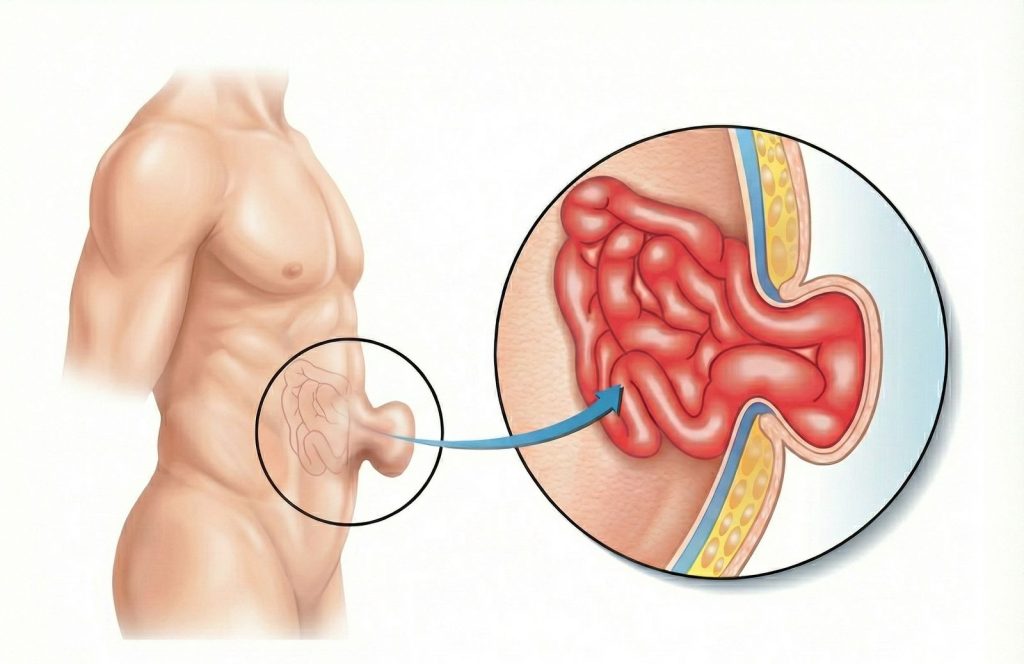
Abdominal Wall Reconstruction
For patients with extensive defects, multiple previous surgeries, trauma, or infection, abdominal wall reconstruction restores functional and anatomical integrity using:
- Laparoscopic or open component separation
- Muscle-relaxing injections
- Tissue expansion/traction techniques
Performed after careful pre-operative optimisation.
Ideal Candidates Include:
- Giant ventral hernias with loss of domain
- Large incisional hernias with unhealthy tissue
- Complex lateral hernias